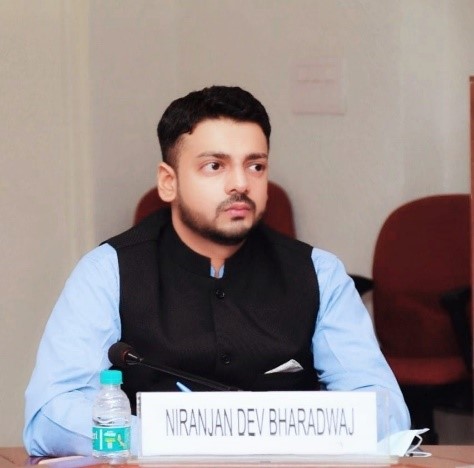
By : Niranjan Dev Bharadwaj (Researcher and Advisor)
Wetlands are among the most life-sustaining yet most neglected ecosystems on Earth. From purifying water and buffering floods to supporting livelihoods and biodiversity, wetlands silently perform functions that are foundational to both environmental stability and human well-being. Every year on 2nd February, the world observes World Wetlands Day, reminding humanity of the urgent need to conserve, restore, and wisely use these fragile ecosystems.
The Origin of World Wetlands Day: A Global Commitment
- World Wetlands Day marks the anniversary of the Ramsar Convention on Wetlands, signed on 2 February 1971 in the Iranian city of Ramsar. This historic international treaty was the first of its kind to focus on the conservation and wise use of a specific ecosystem. Recognizing wetlands as critical to ecological balance and human survival, the Convention emphasized sustainable management rather than exclusionary conservation.
- Over the decades, the Ramsar Convention has evolved into a global movement, with more than 170 countries committing to protect wetlands of international importance. World Wetlands Day was formally designated to raise awareness, encourage action, and renew global responsibility toward these ecosystems that lie at the intersection of nature, climate, livelihoods, and health.
Why Wetlands Matter Today More Than Ever
- In the current era of climate change, water stress, biodiversity loss, and public health crises, wetlands have emerged as natural solutions to human-made problems.
- Wetlands act as:
- Natural climate regulators, storing vast amounts of carbon and moderating temperature extremes
- Water security systems, replenishing groundwater and filtering pollutants
- Disaster buffers, reducing the impact of floods, cyclones, and storm surges
- Biodiversity hotspots, supporting countless species of flora and fauna
- Livelihood foundations, sustaining agriculture, fisheries, and traditional communities
- Yet, despite their importance, wetlands are disappearing faster than forests. Urban expansion, pollution, unsustainable development, and a disconnect between people and nature have pushed wetlands to the margins of policy and public consciousness.
Wetlands and Human Wellness: An Inseparable Link
- Environmental degradation is no longer an abstract ecological concern; it directly impacts human health, dignity, and well-being. Degraded wetlands lead to water contamination, food insecurity, climate-induced displacement, and the spread of diseases. Conversely, healthy wetlands support physical health, mental well-being, cultural continuity, and social harmony.
- This intrinsic link between environmental integrity and human wellness lies at the heart of sustainable development—and is central to the philosophy of the Global Foundation for Advancement of Environment and Human Wellness.
Aligning with the Vision of Professor Ashok Kumar
- The observance of World Wetlands Day resonates deeply with the noble and forward-looking vision of Professor Ashok Kumar, Founder-Chairman of the Global Foundation. His life’s work has consistently emphasized that environmental protection is not separate from human progress—it is its prerequisite.
- Professor Kumar’s vision goes beyond conventional environmentalism. It calls for:
- Integrating ecological responsibility with human values
- Recognizing nature as a partner, not a resource
- Advancing holistic wellness, where environmental health, social equity, and ethical leadership coexist
- Promoting grassroots action alongside global dialogue, ensuring that sustainability is lived, not merely discussed
- Wetlands, in this context, symbolize the very ethos Professor Kumar advocates—interconnectedness, balance, and silent service to life. Protecting wetlands is not just an environmental act; it is a moral responsibility toward present and future generations.
The Role of Institutions, Communities, and Individuals
- World Wetlands Day is not merely commemorative; it is a call to action. Institutions must embed wetland conservation into development planning. Communities must reclaim traditional wisdom that respected water bodies as sacred spaces. Individuals must cultivate ecological sensitivity in daily choices.
- The Global Foundation, under Professor Ashok Kumar’s guidance, continues to serve as a platform where knowledge, action, and compassion converge, encouraging society to move from exploitation to stewardship.
A Way Forward
- As we observe World Wetlands Day, let us remember that wetlands thrive quietly, asking for little yet giving endlessly. Their survival reflects our capacity to act with foresight, humility, and responsibility.
- Protecting wetlands means:
- Protecting water
- Protecting climate
- Protecting biodiversity
- Protecting human wellness
- Above all, it means protecting the future.
- On this World Wetlands Day, may we recommit ourselves to restoring nature—not as an obligation, but as a shared ethical journey toward a more balanced, compassionate, and sustainable world.