

Niranjan Dev Bharadwaj
Researcher and Advisor, Global Foundation for Advancement of Environment and Human Wellness
The Rising Heat: A Wake-Up Call from the Skies Over Leh
Imagine you’re at the airport, eagerly waiting to board your flight to Leh, a place renowned for its breathtaking landscapes, vibrant culture, and serene monasteries. Suddenly, an announcement comes through: your flight has been canceled. The reason? It’s simply too hot for the plane to take off. It sounds almost absurd, doesn’t it? Yet, this is not a rare glitch—it’s a vivid example of how climate change is altering life as we know it.
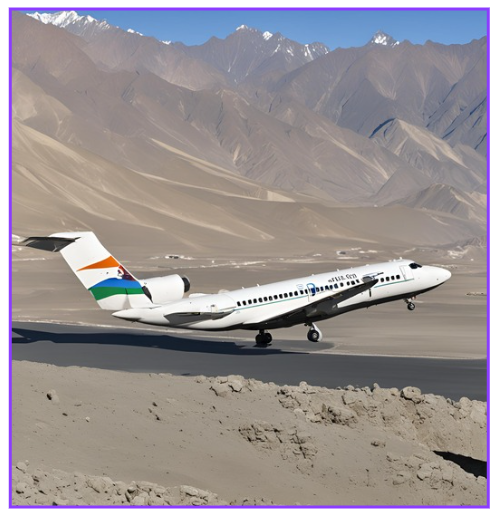
Why is Heat Grounding Flights to Leh?
Leh, sitting over 10,000 feet high in the majestic Himalayas, is a destination like no other. But this high-altitude paradise has a hidden challenge: the air is already thin, making it difficult for planes to gain the necessary lift to fly safely. When temperatures rise, the air becomes even thinner, further complicating takeoffs. For those of us dreaming of a tranquil escape to Leh, this is not just an inconvenience—it’s a powerful reminder of a much larger problem.
- Runways Falling Short
On a hot day in Leh, every centimeter of the 2,754-meter runway counts. As the air heats up, it loses density, and planes must reach higher speeds to achieve lift. But Leh’s runway isn’t long enough to accommodate this increased demand, especially during these unexpected heatwaves. It’s as if the very ground beneath us is shifting, demanding longer runways to fight against the thinning air—a direct consequence of our warming planet. - Engines Struggling for Breath
We often take for granted the science behind a plane’s flight. Yet, imagine the jet engines, designed to gulp down cool, dense air, suddenly gasping in the warm, thin atmosphere. The engines strain, power falters, and flight becomes less reliable. This isn’t just about physics; it’s about safety, about pilots and passengers navigating increasingly unpredictable conditions brought on by a climate crisis that’s getting harder to ignore. - Climbing Higher, Landing Harder
Even if a plane manages to leave the scorching tarmac, the climb is tougher. Every meter up is a fight, as engines struggle in the thin, hot air. And when it’s time to descend, the heat reduces braking efficiency, making landing more treacherous. Every step of the journey, from takeoff to touchdown, is fraught with new challenges that point back to a rapidly changing climate.
What’s Heating Up Leh?
Leh’s scorching days are no longer just a quirk of weather—they’re part of a bigger, more concerning pattern. The region has always been known for its cold, arid climate, but the past few decades have seen alarming temperature spikes, disrupting life in ways big and small.
- The Melting Glaciers: Nature’s Alarms
Once, the Himalayas were home to glaciers that stretched like vast sheets of ice, a natural reservoir of water and life. Today, those glaciers are receding, melting away faster than ever before. The result? Unpredictable rains, flash floods, and, of course, unexpected heatwaves. Leh, once a symbol of serene beauty, is now on the frontlines of climate change, facing the stark reality of a warming world. - Life Under Siege: Heat in a Cold Desert
For the people of Leh, life is changing in real-time. Homes designed to trap heat are suddenly too warm, and fans—a rare sight in this cold desert—are becoming a necessity. This isn’t just an adjustment; it’s a fundamental shift in a way of life that’s been shaped by the region’s unique climate for generations. The residents of Leh are living proof that climate change is not a distant theory but a daily reality.
A Human Story Behind the Headlines
Behind every canceled flight, there’s a story—a couple who planned their dream vacation, a local entrepreneur waiting for supplies, a student returning home. Each story is a thread in a larger tapestry that illustrates how climate change is reshaping our world in unexpected ways. It’s not just the glaciers or the forests; it’s also the human connections, the plans, the hopes, and dreams affected by this planetary crisis.
Leh’s Lesson for the World
Leh’s flight cancellations are more than an inconvenience—they are a clarion call to all of us. The rising heat here is a metaphor for what’s happening everywhere. It’s a signal that climate change is not just knocking on our door; it’s entering uninvited, altering our landscapes, and affecting our lives in countless, unpredictable ways.
We have a choice: We can shrug it off as another news story, or we can see it for what it truly is—a warning. A chance to rethink how we live, how we travel, how we consume, and, most importantly, how we care for our planet. Because if the skies over Leh are telling us anything, it’s that the heat is rising, and it’s up to us to decide how we respond.
Leh’s story is our story. It’s time to listen, learn, and act. Before the rising heat grounds not just our flights but our future.